Our Lady of Fatima Shrine
Our Lady of Fatima Shrine
Bl. Francisco Palau y Quer
November 7th
Bl. Francisco Paulau lived his vocation as a Carmelite priest in 19th-century Spain during a time of persecution. Born in 1811, he entered the Carmelite novitiate in Barcelona in 1832. While he was a deacon, his monastery was burned and its inhabitants imprisoned. Upon their release, they were barred by the civil government from living their community life. However, Francisco Paulau persisted in the pursuit of his vocation and was ordained a priest in 1836. He lived in small grottos or hermitages as he moved frequently due to persecution by civil or ecclesiastical authorities. One day, he was accosted by four men seeking to kill him, and by God’s grace was able to guide their hearts from their murderous intentions to repentance. When the political situation took yet another turn for the worse in Spain, Fr. Francisco Paulau took refuge in France for eleven years. Returning to Spain in 1851, he founded The School of Virtue as a permanent method of catechesis for adults. Falsely accused of participating in workers’ strikes, Fr. Francisco Paulau again found himself in exile on a little island off the coast of Spain, where he found great communion with his God. This devoted priest also labored tirelessly to restore exorcism as a ministry, which had fallen by the wayside after the Enlightenment. Working to liberate souls for Christ from the grasp of demon influences, Fr. Francisco Paulau followed the example of Christ in casting out demons.
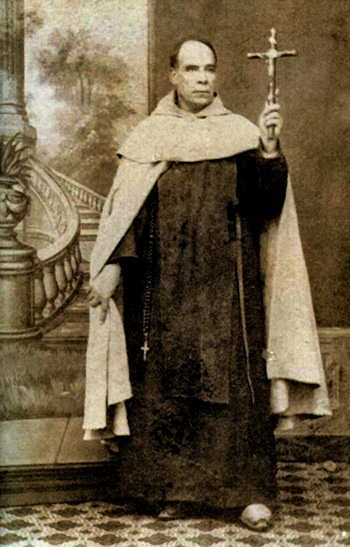
In his final years, he nursed typhoid patients before succumbing to the illness himself on March 20, 1872. Despite wishing to be a martyr himself, his martyrdom was his life of nearly constant persecution, misunderstandings, and calumnies. His feast day is Nov. 7. He would be a good patron saint for persecuted religious, priests, exorcists, and victims of calumny. Bl. Francisco y Paulau y Quer was beatified by Pope John Paul II in 1988.
Saint Pio of Pietrelcina
September 23rd
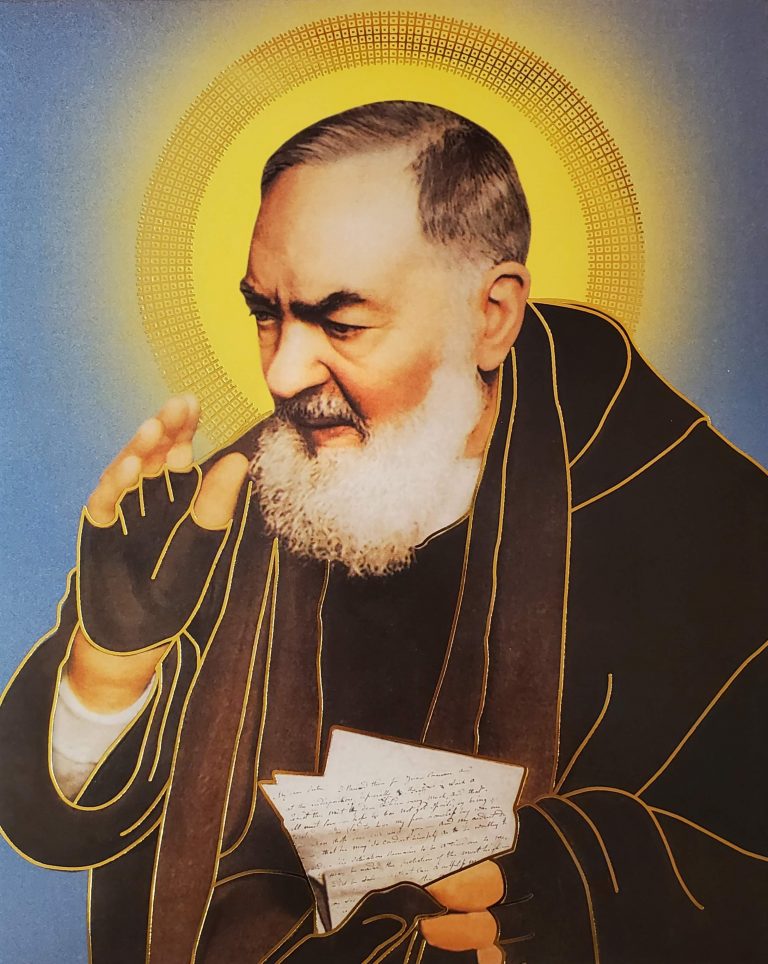
The miracle worker known around the world as Padre Pio was born Francesco Forgione on May 25, 1887, in Pietrelcina, Italy. He was one of eight children born to peasant farmers, Grazio and Maria. He was very devout as a young boy, serving mass and desiring to become a priest at the age of five. Up until the age of ten, he watched his father’s sheep in preparation for his vocation in tending the Lord’s flock.
Due to his helping the family with the shepherding, his schooling needed extra attention before entering the Capuchin Franciscan Friars. Despite his poor health, he was ordained as a priest. He suffered often from illness and literal battles with the devil. Already a priest, Padre Pio was even drafted into the Italian Army in 1914 during World War I and served as a medic before being released due to his health issues. Padre Pio was most notably a spiritual medic for souls, by virtue of his priestly vocation, spending many hours in the confessional, reconciling sinners to God. In his earlier years, it was estimated he spent 15-19 hours a day in the confessional while in the 1940s and 50s he still spent five to eight hours hearing confessions. He was blessed with the ability to read souls, and remind people of the sins they were forgetting in the confessional. So many people came to him for confession that tickets had to be issued because the lines were so long. In August 1918, he received the wounds of the stigmata, which would remain with him for the next 50 years until a few days before his death on September 23, 1968, when they were miraculously cured. There are many stories about the bilocation of Padre Pio. One of the most notable ones was the case of an Allied bomber during WWII being waved away by a monk in the sky above San Giovanni Rotondo. When the pilot reported the incident, it was written off as fatigue. Among the good saint’s many admonitions: Some people are so foolish that they think they can go through life without the help of the Blessed Mother. Love the Madonna and pray the rosary, for her Rosary is the weapon against the evils of the world today. All graces given by God pass through the Blessed Mother. Also, Pray, hope, and don’t worry. Worry is useless. God is merciful and will hear your prayer. Padre Pio was canonized by Pope John Paul II on June 16, 2002.
Bl. Elisha of St. Clement
May 29th
Bl. Elisha was born in Bari, Italy on Jan. 17, 1901. She was baptized Theodora, which means gift of God, by her devout Catholic parents. On the night before her First Communion, she had a vision of St. Therese of Lisieux, who told her that she would be a sister like she was. Elisha became a Third Order Dominican in 1915. At the age of 19, she entered the Carmelite order.
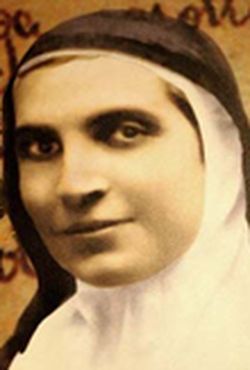
She wrote of her departure, Goodbye, my house, nest of peace and love, sweet sanctuary of faith and virtue, goodbye forever, I’m leaving you for my God. Lord, I’ve heard your voice, I’m flying to Carmel. At the age of 24, she gave herself completely to God. Having been weakened by a virulent influenza earlier in the year, Elisha succumbed to a high fever, and on Christmas Day in 1927 at the young age of 26, she passed into the arms of her Creator, whom she loved most ardently. Pope Benedict XVI beatified Bl. Elisha on March 18, 2006 Elisha of St. Clement May 29.
St. Maria del Sagrario
August 16
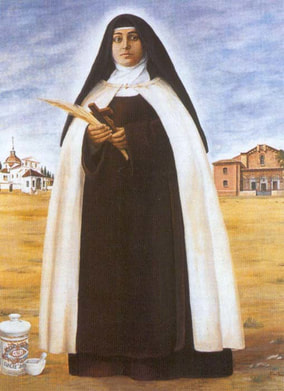
Bl. Maria del Sagrario was a pharmacist, a Carmelite nun and a martyr of the Spanish Civil War. Elvira Cantarero was born to her parents in Toledo, Spain on January 8, 1881, the third of four children. Following her father’s footsteps into the field of pharmacy, she was one of the first women to become a pharmacist in Spain.
Despite her talents in the pharmaceutical field, she discerned the call to a religious vocation. However, her father died in 1909 and her mother two years later. To this sister fell the task of caring for her younger brother until he could begin his career. While she waited to enter Carmel, she ran the pharmacy while personally nursing and encouraging the sick, as well as teaching catechism. Finally, the day arrived for her heart’s desire. She entered Carmel in Madrid in 1915. She was elected as prioress for the second time in July 1936 and later that month, the convent was attacked by a mob during the Spanish Civil War. Mother Maria Sagrario was able to help her sisters escape the mob to safe locations. Her brother pleaded with her multiple times to take refuge with his family, but she refused saying she needed to take care of her sisters. The following month, her hiding place with another sister was discovered and both were arrested. Mother Maria refused to betray anyone and was executed by a firing squad on the feast of the Assumption, 1936. She truly lived the words of Our Lord, Greater love hath no man than to lay down his life for his friends. She was beatified by Pope John Paul II in 1998.
Bl. Marie Rose Durocher October 6
Bl. Marie Rose Durocher was born in Quebec, Canada to her parents, Olivier and Genevieve, on Oct. 6, 1811, the tenth of eleven children. They named their new daughter Eulalie Melanie. Three of her brothers would later enter the priesthood. Her parents were prosperous farmers and Eulalie grew to be a competent horse rider and named her horse Caesar. Illness interrupted her schooling with the Sisters of Notre Dame, so she returned home from boarding school at the age of 12 for tutoring at home.
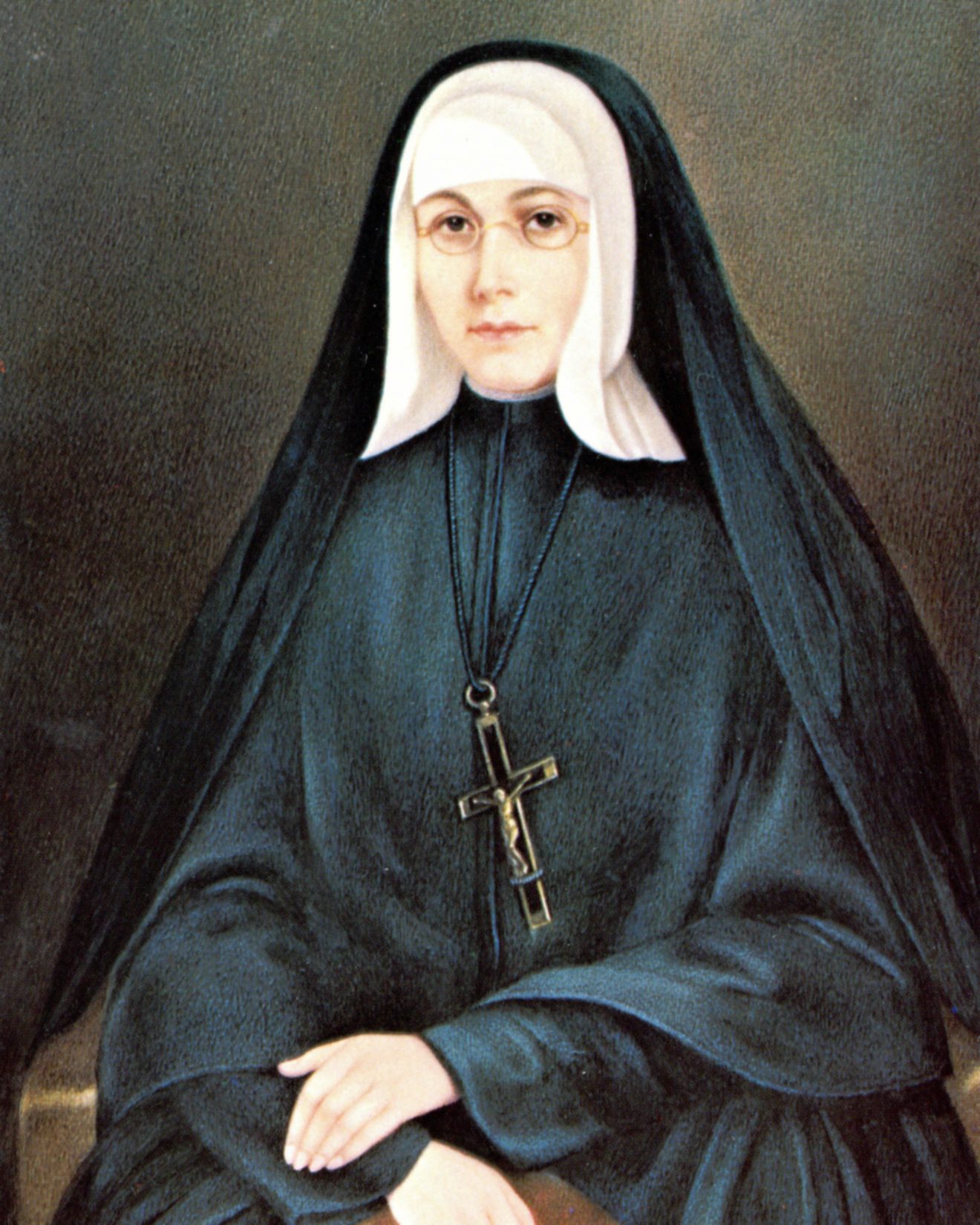
Again, at 16, she returned to the sisters for two years but was unable to be accepted into the novitiate there due to her poor health. In 1830, her mother passed away and the family moved to the parish house where her brother, Theophile, was a priest. She worked as his secretary and housekeeper for twelve years. During this time, Eulalie became acutely aware of the lack of educational opportunities for young girls. The French order, The Sisters of the Holy Names of Jesus and Mary, considered establishing a congregation in Quebec, but the plans never materialize. However, the bishop, realizing the eagerness of Eulalie and a few of her friends, encouraged her to lead a new congregation in Quebec by the same name. On February 28, 1844, Eulalie Durocher became Sister Marie Rose while her friends, Melodie Dufresne and Henriette Ceri took the names Sister Marie-Madeline and Sister Marie-Agnes. After their vows, they elected Sister Marie Rose to be Mother Superior. In the short span of five years, they established four convents where they taught English and French. Bl. Marie Rose experienced her share of troubles with a priest who wanted to manage her schools. Nevertheless, God gave her the grace she needed to carry on despite his badmouthing the sisters’ efforts. Bl. Marie Rose spent much of her life in ill health, and passed away at the age of 38 on Oct. 6, 1844, having spent her lifetime in the service of her God. She was beatified by Pope John Paul II on May 23, 1982.